HI. Good day. How are you today (KYO-) ? How is your family (KAZOKU) ? Today, We learned section 5-2. Last time as Section 5-2, We learned about some Verb’s categories. It was one of Japanese Grammars. If you want to learn conversation, you can skip it. First of all, we start from Japanese conversation bellow.
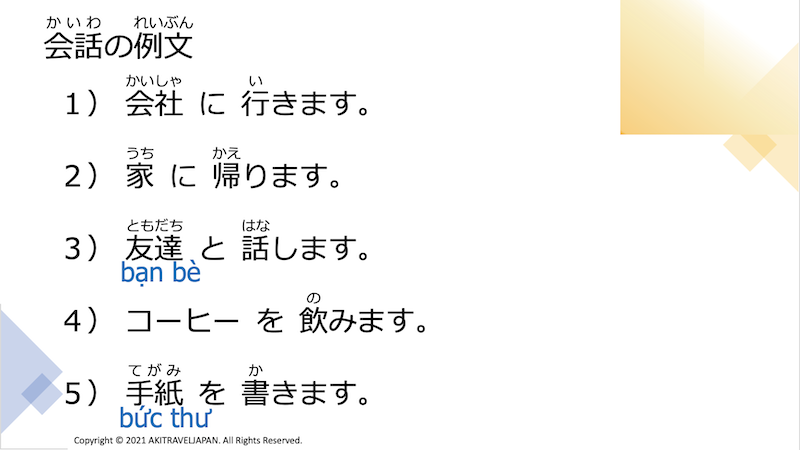
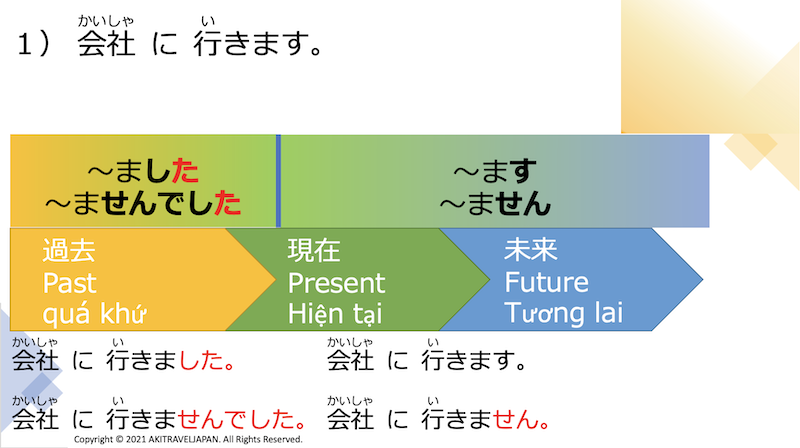
- KAISYA NI IKIMASU ( KAISYA : company )
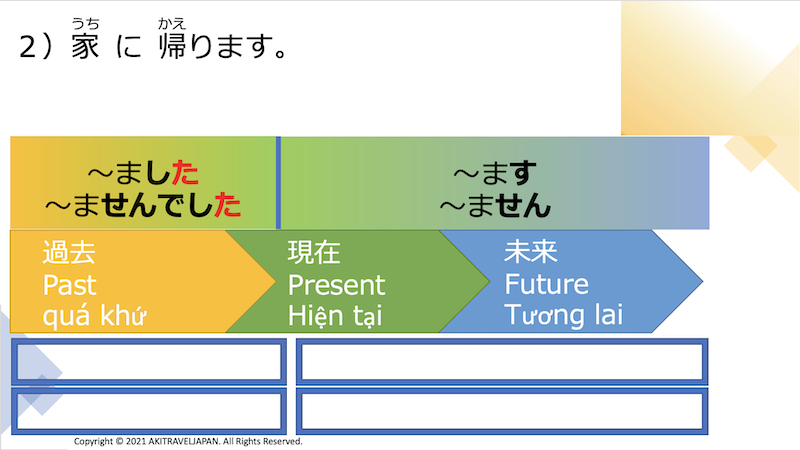
- UTI NI KAERIMASU ( UTI : home )
- TOMODATI TO HANASIMASU ( TOMODATI : friend )
- KO-HI- WO NOMIMASU ( KO-HI- : coffee )
- TEGAMI WO KAKIMASU ( TEGAMI : letter )
Today, Those sentences are Mixed some vocabularies and verbs. Regarding section 5, This is verb section. Today, ” past verb ” and ” present verb “.
What is 1) verb? The answer is ” IKIMASU”. Meaning, ” go ” and ” going “.
What is 2) verb? The answer is ” KAERIMASU”. Meaning, ” back to “.
What is 3) verb? The answer is ” HANASIMASU”. Meaning, ” talk ” and ” going to take “.
What is 4) verb? The answer is ” NOMIMASU”. Meaning, ” drink ” and ” going to drink “.
What is 5) verb? The answer is ” KAKIMASU”. Meaning, ” write ” and ” going to write “.
How are those sentences ? Because Japanese verbs have only 2 way. past and present, future. Meaning, present form and future form is the same style.
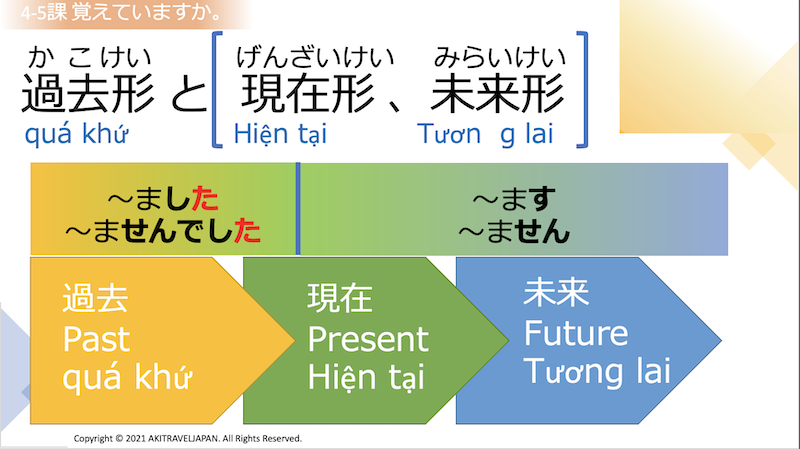
About past sentence, final letter is ” TA “. Like ” MASITA”. present and future sentence, ” MASU “ About past negative sentence, ” MASENDESITA ” . Present and future sentence is ” MASEN “.
Can you change the 1) – 5) above Japanese sentence to past and past negative sentence ? I took a note only 1) sentence bellow.
- KAISYA NI IKIMASU, KAISYA NI IKIMASITA, KAISYA NI IKIMASEN DESITA.
Are you agree the above sentence ?
Next, from 2) – 4) , you try those sentence to change from present to past, past negative , present negative by yourself. Let’s try them.
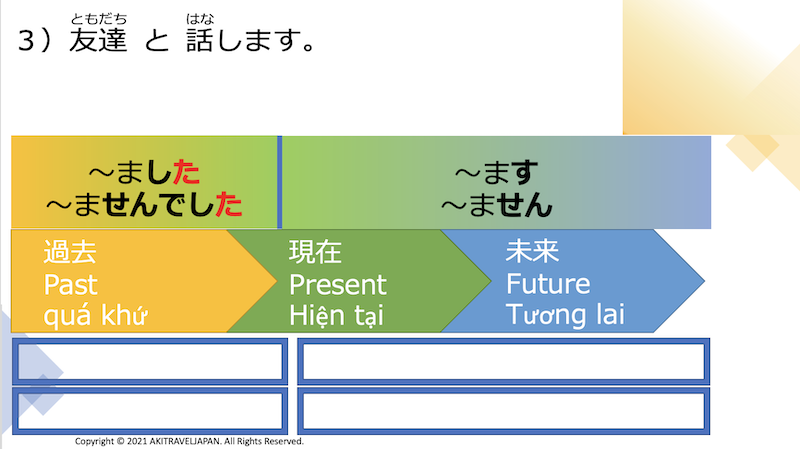
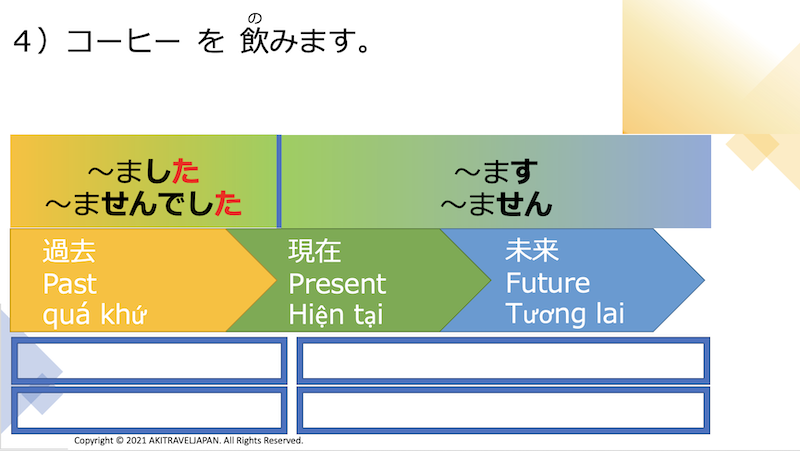
Could you do all ? Let’s try them. If you have a question. let me know via email me.
See yah.